How pressure data saved a Tour player's tournament
Every coach has seen it: a swing that looks technically sound, and a ball that keeps missing anyway. When the video shows nothing wrong, where do you look next? This is the story of a top PGA Tour player caught in exactly that trap, and how Swing Catalyst pressure data found what the camera could not..
In the lead-up to the tournament, a top PGA Tour player was in trouble. The course was unforgiving, tight fairways and punishing rough, and he was hitting his driver over 30 yards offline. For a player at that level, on that stage, it was the kind of miss that ends a week before it starts.
What the eye can't see
Here is the strange part. On video, and to the naked eye, there was no visible difference in his swing. Nothing a coach could point to. The tempo looked right. The positions looked right. Everything the camera showed said the swing was fine but the ball kept leaking offline, and no amount of watching video revealed why.
This was not a swing technical issue. It was a pressure issue.
The problem lived in the ground, not the picture
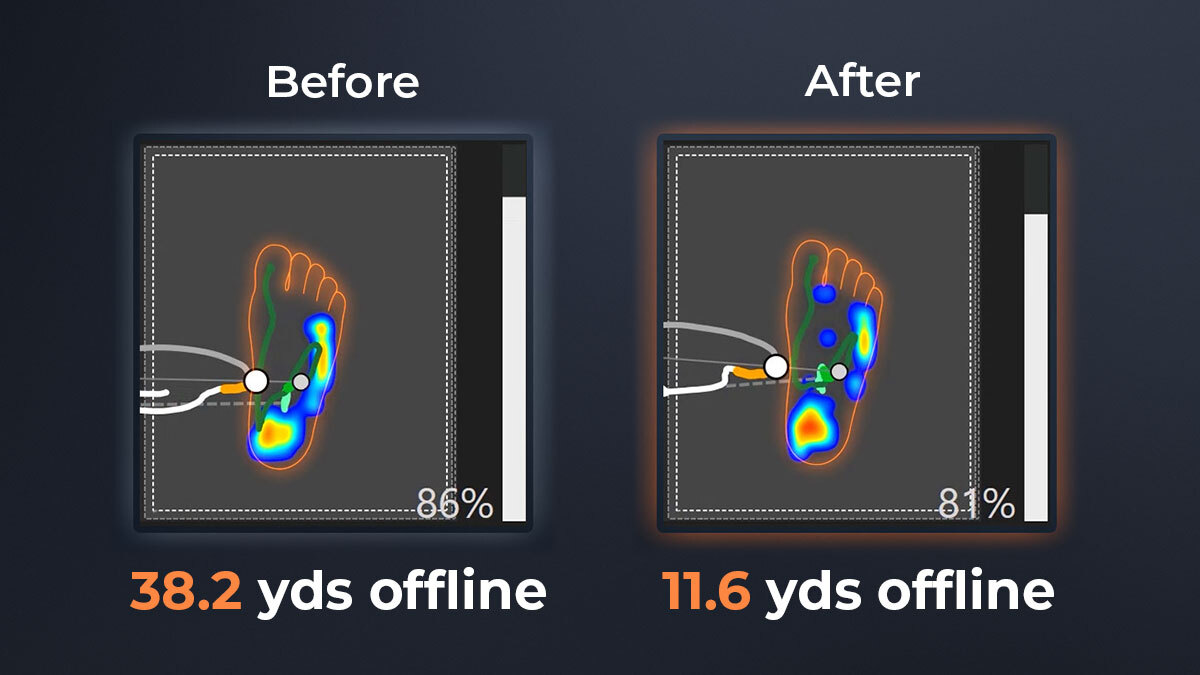
When Dr. Scott Lynn, one of the world's leading authorities on how golfers use the ground, pulled up the pressure data, the answer was obvious in seconds. The pressure heat map under the player's feet showed his pressure sitting on the outside of his trail foot. It never moved to where it needed to be. Invisible in a swing video and to the naked eye but obvious and undeniable in the data.
That is the gap pressure data closes. A swing video shows you what the body does. It cannot show you how the player is using the ground, where the pressure sits, when it shifts, and how efficiently it moves from trail side to lead side through the swing. Those forces are what actually launch the ball, and until you can see them, you are guessing at the cause and treating the symptom.
One session, a different tournament
The fix was not a swing rebuild. It was a re-centering of pressure, worked in a short session on the pressure plates, with the data giving instant feedback on every shot. The player could see the heat map change as he made the adjustment, which is the whole point. He was not being told to feel something abstract. He was watching the correction happen in real time.
The result
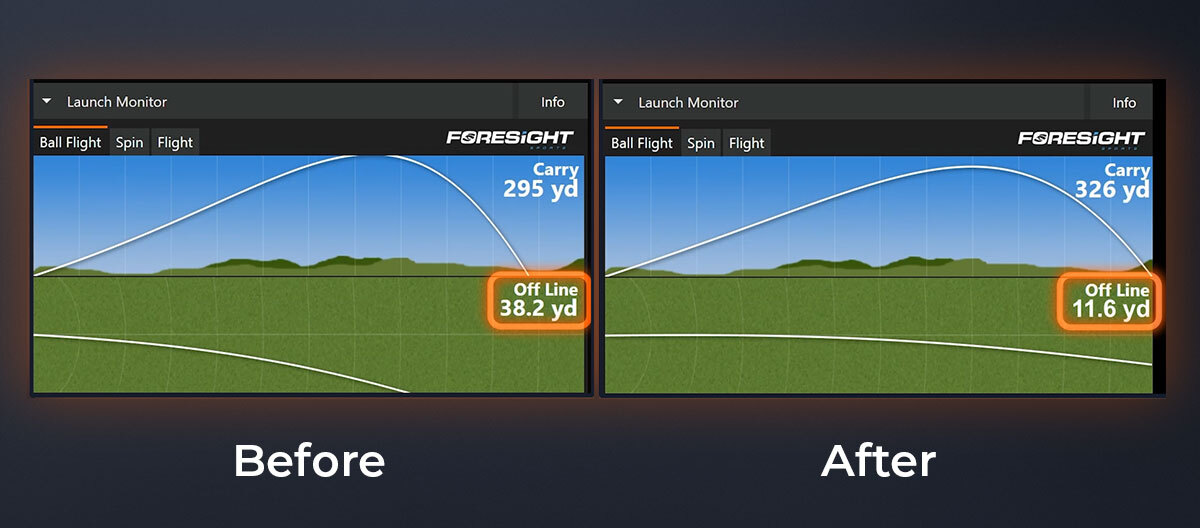
From over 30 yards offline to 11 yards offline in just an hour session. A likely missed cut turned into a top finish. Same player, same swing to the eye, completely different outcome, because the coaching addressed what was actually wrong.
What the comparison shows
Looking at the two swings side by side, the difference is right there in the data and heat map. In the before swing, the maximum pressure on his trail foot reaches 86%, and you can see on the pressure heat map that most of that pressure lies on the outside of his trail foot. Working on centering the pressure, using more of the whole foot, puts him in a much better position to push more from his trail foot, instead of using the outside and almost rolling his foot. In the after, you can see that the distribution of pressure moves more towards the center of his foot, which tells you that the pressure is more centered. And in the middle you can see it lets him shift the pressure faster to his lead side. The launch monitor tells the same story: 38 yards offline becomes 11. The only thing that changed is how he used the ground, and it is the one thing the camera never showed.
Why this matters for every coach, not just tour players
Feel is subjective. Two coaches watching the same swing will describe it three different ways, and the player feels something different again. Video helps, but it still only shows the outside of the motion. Pressure data is the objective layer underneath. It turns an argument about feel into a picture everyone can see.
This changes how you coach in three concrete ways:
-
You diagnose faster. The cause shows up in the data instead of being chased through swing positions.
-
You communicate clearer. A player trusts a change they can see happen on screen far more than one they are told to feel.
-
You build a reputation. The coach who can show what is really happening, and prove the fix worked, is the coach players stay with and refer.
None of this requires a tour player or a lab. The same pressure and weight-shift data that saved a tournament is what you can put in front of a junior, a club member, or a mid-handicapper on any lesson tee.